
Happy New Year to all our customers in Banbury and across North Oxfordshire!
The decorations are coming down, the kids are heading back to school, and life is slowly returning to normal. But while you’re busy making New Year’s resolutions and packing away the baubles, there is one hardworking member of the household that often gets forgotten: your oil boiler.
Think about the extra demand placed on your system over the last fortnight: guests showering in the morning, the thermostat cranked up for elderly relatives, and the heating running late into the evening for New Year’s Eve parties. Your boiler has likely clocked up more hours in the last two weeks than in the whole of October and November combined.
January is the most common time for heating systems to struggle as a direct result of this festive marathon. Before you settle back into your routine, take five minutes to do these three simple checks.
1. The “Post-Christmas” Tank Check
It sounds obvious, but you would be amazed how many emergency calls we get in January simply because the tank has run dry.
With the heating on constantly over the holidays, your oil consumption in December was likely much higher than normal. Don’t assume you have enough fuel to last until February just because you filled up in November.
Why this matters: Running an oil tank completely dry isn’t just an inconvenience; it can be costly. When the level drops too low, the fuel line can suck up the “sludge” and sediment that sits at the bottom of the tank, clogging your filters and nozzle. Plus, once you refill, you may need an engineer to bleed the air from the system to get it firing again.
- The Fix: Go out to the garden today and check your sight gauge or dipstick. If you are below ¼ full, order your top-up now. Oil deliveries in rural Oxfordshire can take longer during icy weather, so don’t get caught out by a delivery backlog.
2. Listen for “Kettling”
Is your boiler making a banging, whistling, or rumbling sound—a bit like a kettle boiling? This is known as “kettling,” and it is often caused by a build-up of limescale or sludge on the boiler’s heat exchanger.
Local Context: Oxfordshire is known for its hard water, which can accelerate limescale build-up inside heating components. While the boiler might still be heating your radiators, these noises are a warning sign. Kettling restricts water flow, making your system work harder and use more oil to reach the same temperature. Ignored over time, this stress can even cause the heat exchanger to crack, leading to a very expensive repair.
- The Fix: If the noise is loud or persistent, it’s time to call in an expert. It usually indicates the system needs a professional power flush or a chemical descaler treatment to restore efficiency.
3. Check Your Water Pressure
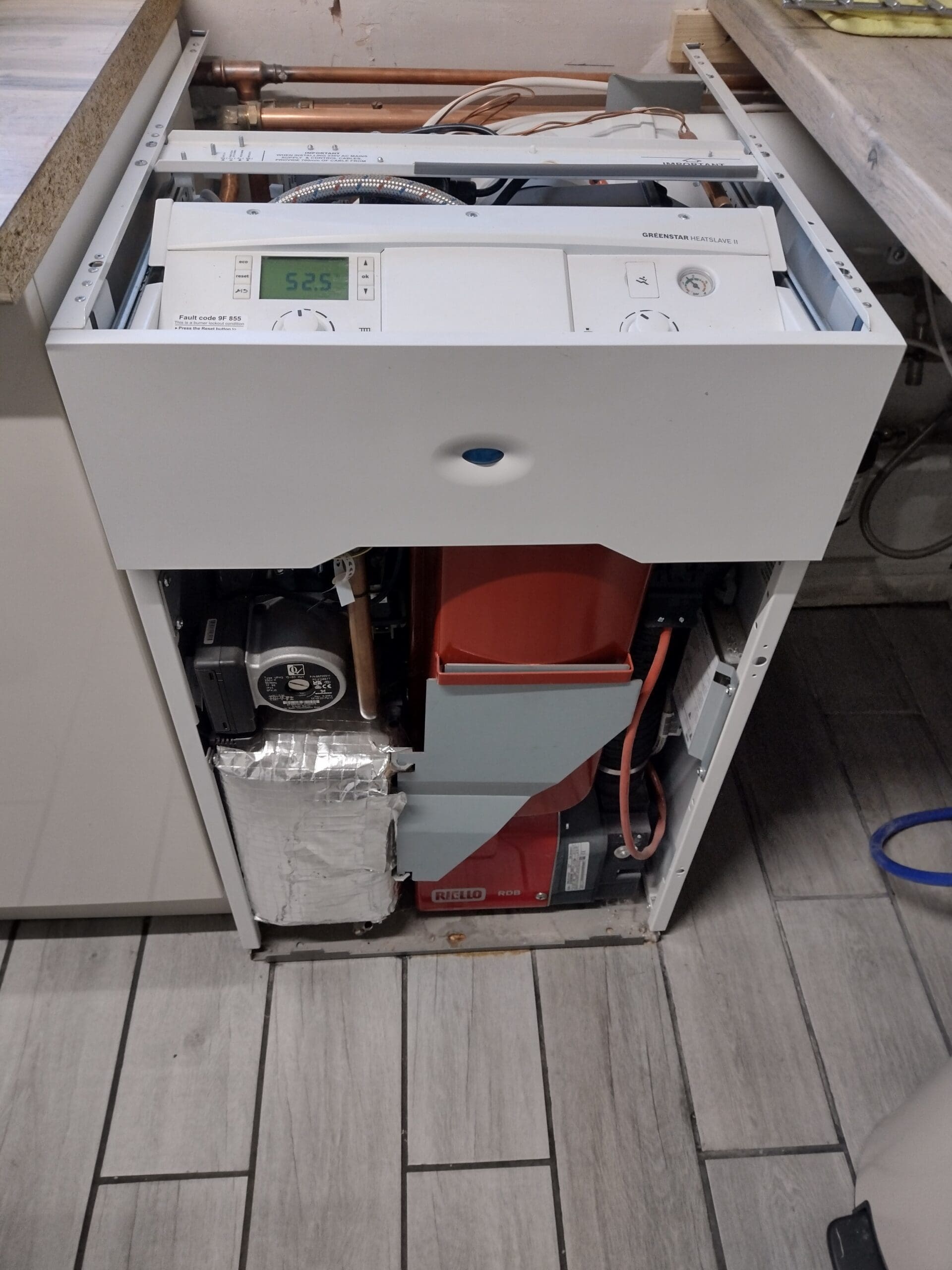
Cold snaps can cause fluctuations in pressure, and small leaks can go unnoticed until the system cools down. If you have a sealed system (which most modern oil boilers are), check the pressure gauge on the front of your boiler or near the filling loop.
The Safety Lockout: Low pressure is one of the most common reasons for a sudden boiler lockout. Modern boilers have safety sensors that shut the system down if there isn’t enough water to operate safely, leaving you without heat until the pressure is restored.
- The Fix: The needle should usually be between 1.0 and 1.5 bar (check your manual to be sure). If it has dropped into the red zone (below 1.0), you need to top it up using the filling loop. Tip: If you have to top it up frequently, check your radiator valves for small damp patches—you might have a minor leak.
Why Oil Boilers Need a “Health Check”
Unlike gas boilers, oil systems naturally produce soot as a byproduct of combustion. Over a busy winter, this soot builds up on the internal baffles of the heat exchanger.
Think of this soot layer like wearing a thick coat inside the boiler—it acts as an insulator, stopping the heat from the flame getting into the water pipes. Even a thin layer of soot can significantly drop your boiler’s efficiency, meaning you burn more oil for less warmth.
Need a Hand?
At PBHS, we have been keeping Banbury and the surrounding villages warm since 2007. Whether your pressure keeps dropping, that banging noise is keeping you awake, or you just want a routine service to clear the winter soot, we are here to help. Book Your Annual Service Here or call Paul on +44 7498 890 182 to start 2026 with peace of mind.